Wondering whether Hudson, MA gives you the right mix of lifestyle, value, and day-to-day convenience for your next move? If you are comparing towns in Central Massachusetts and MetroWest, Hudson stands out for a reason. You get a real downtown, a range of housing options, and a location that feels connected without sitting in the highest price tier nearby. Let’s take a closer look.
Hudson at a glance
Hudson is a Middlesex County town of about 20,000 residents that was incorporated in 1866. Town planning documents describe it as a mature New England town with a compact mixed-use center and lower-density areas around the edges.
That matters if you are looking for a town with both character and change. Hudson is not being framed by the town as a place that is frozen in time. Local plans point to continued downtown reuse and added density within walking distance of the center, which suggests a community that is still evolving.
Why Hudson appeals to many buyers
For many move-up buyers and relocators, Hudson hits a practical middle ground. It often appeals to people who want more daily-life amenities than a purely residential subdivision setting, but who are not ready to stretch into some of the highest-priced MetroWest towns.
The town also has an established owner-occupant profile. Census QuickFacts reports a 73.2% owner-occupied rate, a median owner-occupied home value of $496,800, a median gross rent of $1,406, and a median monthly mortgage cost of $2,625. The mean travel time to work is 30.9 minutes, and the median household income is listed at $103,400 for 2020 through 2024.
Taken together, those numbers suggest Hudson is a town where many housing decisions come down to balancing budget, space, and lifestyle. It is not simply about finding the lowest price possible.
Hudson home prices and inventory
If affordability is one of your biggest questions, it helps to look at Hudson in context. According to the Massachusetts Association of REALTORS April 2026 market update, the year-to-date median sales price in Hudson was $663,750 for single-family homes and $434,950 for condos.
Inventory remained fairly tight in that update, with 1.4 months of inventory for single-family homes and 2.4 months for condos. That points to a competitive market, even if one-month or small-sample data should be treated as directional rather than as a precise forecast.
How Hudson compares nearby
Hudson tends to sit in the middle of the regional price range rather than at either extreme. In the town’s housing plan comparison table, 2022 single-family median prices were listed at $550,000 in Hudson, compared with $530,000 in Berlin, $525,000 in Marlborough, $767,500 in Bolton, $1.167 million in Sudbury, and $739,000 across Middlesex County.
For condos, Hudson was listed at $365,000, compared with $320,000 in Marlborough, $526,015 in Berlin, $625,000 in Bolton, $800,590 in Sudbury, and $576,000 for Middlesex County overall. If you are trying to move up without jumping to the top of the regional price ladder, that middle position can be appealing.
What kinds of homes you will find
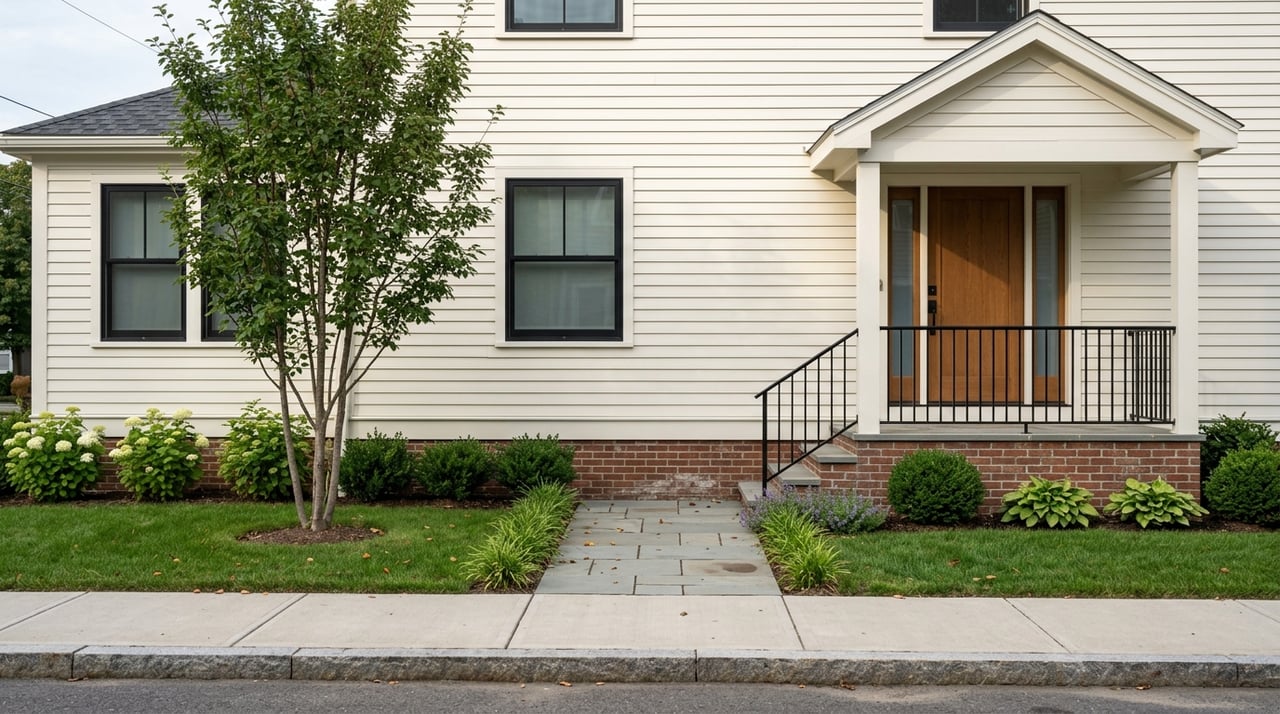
Hudson’s housing stock is largely made up of older, modest single-family homes on smaller lots, according to the town’s 2025 to 2030 Housing Production Plan. The same plan also notes a meaningful multifamily rental presence, much of it built in the 1980s.
That mix can give you more than one path into town. Depending on your goals, you may find single-family homes, condos, or rental options that fit your budget and maintenance preferences.
Renters should still go in with realistic expectations. The town’s housing plan reported a rental vacancy rate of 4.5% by 2020, which suggests you should not expect a lot of extra slack in the rental market.
Downtown is a real part of Hudson life
One of Hudson’s strongest selling points is its downtown. The Massachusetts Municipal Association describes historic downtown Hudson as a destination for restaurant goers, shoppers, and cyclists, with locally owned businesses, the Assabet River Rail Trail, and the Assabet River running through it.
This is not just a nice extra on a map. Downtown appears again and again in how Hudson is described by local and regional sources, which tells you it is central to the town’s identity.
A center that is still improving
Hudson is also investing in its downtown experience. The South Street Riverwalk project is designed to create a more welcoming destination with open river views, lighting, benches, picnic areas, and ADA-compliant walkways through Cellucci Park.
For buyers thinking long term, that kind of public investment matters. It can support walkability, usability, and the overall feel of everyday life near the center.
Outdoor access and recreation
If you like the idea of having outdoor options close to home, Hudson offers more than just a downtown setting. The Assabet River Rail Trail runs through town and is one of the community’s most visible recreation features.
The town also points to Hudsons Pond, the Assabet River, and the nearby Assabet River National Wildlife Refuge as important outdoor assets. Local planning documents say Hudson aims to expand leisure opportunities while preserving the open space and natural features that help define the town’s character.
That combination can be a good fit if you want your weekends and evenings to feel easy. You may not need to drive far to get a walk, bike ride, or quiet outdoor break into your routine.
What commuting looks like from Hudson
Hudson is not a rail-first town. It does not have its own MBTA commuter rail station, and the town’s open-space and recreation plan says public transportation access is limited.
That said, Hudson is connected to nearby rail options. The same plan notes that commuter rail stations are located in Southborough and Acton. The current 495 Connector links Downtown Hudson with South Acton, Southborough, and Forge Park/495 commuter rail stations, while Route 15 includes stops such as Downtown Hudson, the Hudson Senior Center, and Highland Commons.
Is Hudson a good fit for commuters?
Hudson can work well if you are comfortable with a car-and-shuttle routine. If you want a train station in town or a more direct rail setup, you will want to compare Hudson carefully with other locations.
That does not make Hudson less appealing. It just means commute style should be part of your decision, especially if your work schedule depends on regular rail access.
Is Hudson right for a move-up purchase?
For move-up buyers, Hudson can make a lot of sense when you want a better lifestyle fit without automatically moving into the most expensive nearby market. You may be able to find the combination of space, downtown access, and housing variety that feels harder to reach in higher-priced towns.
At the same time, Hudson is not a bargain market. Current median prices show that clearly. The better question is often whether Hudson gives you enough value for the price compared with your alternatives.
If your priorities include a real town center, trail and river access, and a mix of single-family and condo options, Hudson deserves a close look. If your top priorities are the lowest possible entry price or direct in-town rail service, it may or may not be the best fit.
Why long-term planning matters
Hudson’s planning documents suggest a town that is still shaping its future. The open-space plan describes a mixed-use town center with lower-density neighborhoods around it, and it notes that more than a quarter of town land is vacant and developable.
The master planning direction also emphasizes downtown redevelopment and added density within walking distance of the center. For you as a buyer, that can point to a town that is continuing to invest in its core rather than one that is already fully built out.
That kind of evolution can be a positive if you want a place with momentum. It may also be worth weighing if you strongly prefer a town with less future change near the center.
Final thoughts on Hudson
Hudson is often a strong fit for buyers who want a town with identity, not just a place to sleep between commutes. Its downtown, trail access, riverfront improvements, and middle-of-the-pack regional pricing give it a profile that feels distinct.
At the same time, fit matters more than hype. Your budget, commute, housing type, and lifestyle priorities should all shape the decision. If you want clear, local guidance as you compare Hudson with other Central Massachusetts and nearby Middlesex County options, Mollie Reynolds can help you sort through the details and move forward with confidence.
FAQs
Is Hudson, MA affordable for a move-up home purchase?
- Hudson is often more attainable than some higher-priced nearby towns, but it is not a low-cost market. The April 2026 year-to-date median sales price was $663,750 for single-family homes and $434,950 for condos.
Does Hudson, MA have a commuter rail station?
- No. Hudson does not have its own commuter rail station. Nearby rail access is available through stations such as Southborough and South Acton, with shuttle connections through the 495 Connector network.
What is the downtown area like in Hudson, MA?
- Downtown Hudson is one of the town’s defining features. Local and regional sources describe it as a center for dining, shopping, cycling, and everyday errands, with access to the Assabet River Rail Trail and riverfront areas.
What types of homes are common in Hudson, MA?
- Hudson’s housing stock is largely made up of older, modest single-family homes on smaller lots, along with a meaningful multifamily rental presence and condo options.
Is Hudson, MA a good fit if you want walkability and outdoor access?
- It can be. Hudson offers a compact downtown, the Assabet River Rail Trail, riverfront improvements, and nearby outdoor spaces that support an active daily routine.
Is Hudson, MA a town that is still growing and changing?
- Yes. Local planning documents emphasize downtown reuse, added walkable density near the center, and continued investment in public spaces, which suggests Hudson is evolving rather than standing still.