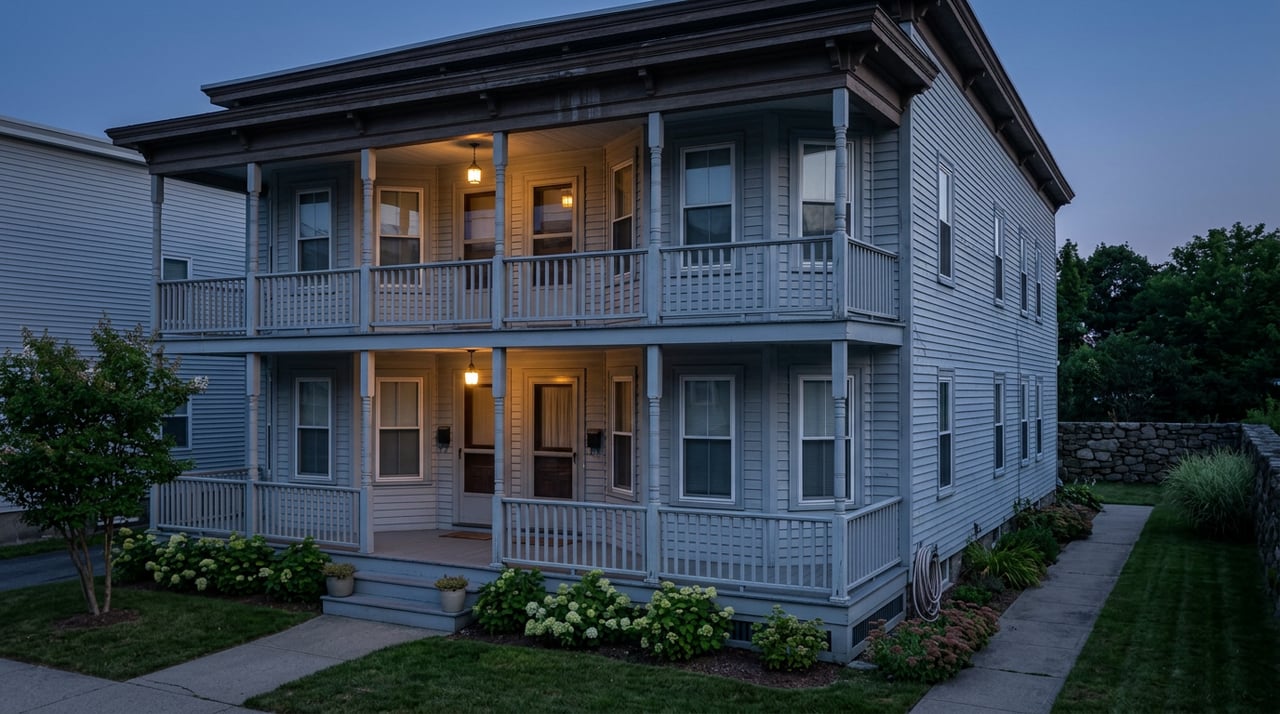
Say you've narrowed your search to a triple-decker in Vernon Hill or Main South. The inspector spends three hours in the basement and attic, hands you a clean report with a short punch list, and you start mentally moving in. Then, two weeks before closing, your insurance agent calls. The 60-amp electrical panel that didn't bother your inspector is a hard no for your carrier, and now your mortgage is stalled because your lender won't fund without proof of coverage.
This happens often enough in Worcester's three-decker market that it's worth saying plainly: a clean inspection is not the finish line. It's the first of several separate checks, run by different people, at different points in the transaction, each looking for something the others don't. Understanding what each one actually checks, and when, is the difference between a smooth close and a scramble in week six.
Three Gatekeepers, Not One
A single-family home usually has one real gatekeeper between offer and close: the inspector. A Worcester triple-decker, especially one built in the boom years between 1880 and 1920, adds at least two more. The insurance underwriter checks different things than the inspector did. If the building was ever converted to condos, the closing attorney has to verify a separate stack of legal paperwork that has nothing to do with the mechanical systems. And because most of this housing stock predates 1978, the lead paint disclosure process runs on its own timeline, with its own recent rule changes.
None of these gates is likely to kill a deal on its own. But they can each reprice it, delay it, or force a renegotiation, and they surface at different weeks in the process. Here's how they line up.
| Gate | What It Actually Checks | When It Happens | What It Can Do to the Deal |
|---|---|---|---|
| Home inspector | Mechanical, electrical, and structural condition | During your inspection contingency, typically days 3 to 10 | Produces a punch list you can negotiate, rarely kills the deal outright |
| Insurance underwriter | Panel amperage, wiring type, roof age, sometimes fire history | After you apply for a binder, often in the final two weeks before closing | Can decline coverage or require an electrical upgrade before binding, which stalls your lender |
| Lead paint disclosure | Whether the property has a recorded lead history in the state database | Before you sign the purchase and sale agreement | Seller must disclose known hazards; you get a 10-day window to test independently |
| Closing attorney / title | Master Deed, Declaration of Trust, shared-system responsibility, if condo-converted | During title search and document review before closing | Missing or incomplete condo documents can push the closing date |
What the Inspector Actually Catches
Worcester's triple-deckers grew out of a specific moment: a wave of immigrant workers needed housing near the city's manufacturing base at the turn of the 20th century, and builders answered with a three-story, three-family design that let a live-in owner collect rent from two floors above or below. According to census figures reported by the Worcester Business Journal, nearly a quarter of Worcester's homes still sit in buildings with three or four units, a share unmatched by most New England cities outside Boston's old streetcar suburbs.
That age shows up consistently on inspection reports. Local inspectors flag undersized 60-amp electrical panels, often with layers of DIY wiring added on top of the original knob-and-tube. Galvanized steel supply lines are common too, and they corrode from the inside, so a home can show reasonable water pressure at the inspection and lose it within a year as the pipes narrow further. Aging oil-fired heating systems with cracked heat exchangers or rusted flue connections turn up regularly, along with moisture in masonry basements that sellers sometimes wave off as normal for an old foundation. None of this is unusual for a building this age. What matters is that an inspector documents it as a condition issue, while an insurer treats the same finding as a coverage decision.
The Insurance Gate Is Where Old Wiring Gets Expensive
This is the gap that catches buyers off guard. A 60-amp panel or active knob-and-tube wiring can pass a home inspection with a note to budget for an upgrade, and still get you a flat decline from an insurance carrier, or a quote that assumes the panel gets replaced before the policy binds. Since most lenders require proof of homeowners insurance before they'll fund, a coverage problem discovered two weeks before closing becomes a financing problem on the same timeline.
Fire risk is part of why insurers scrutinize these buildings closely. Fire departments in several Massachusetts cities with large triple-decker inventories, Worcester among them, have reported that these buildings account for a disproportionate share of their structure fire calls, pointing to a familiar combination: outdated wiring, older gas appliances, and original wood shingle siding that hasn't been replaced with more fire-resistant material. None of that means a given triple-decker is unsafe. It means an insurer is going to ask more questions about the electrical system than a single-family home would draw, and you want that answer before your financing contingency runs out, not after.
The Lead Paint Rule That Changed This Year
Massachusetts has required lead paint disclosure on pre-1978 homes for decades, but the state's disclosure process got a real update in 2026. The Department of Public Health revised the Property Transfer Lead Paint Notification forms, and sellers and their agents are now expected to check the state's Lead Safe Homes database before listing a property. If a past inspection or test result exists for the address, it has to be shared with you before you sign a purchase and sale agreement. Sellers are also now on the hook for disclosing known lead-based paint hazards specifically, not just the possible presence of lead paint in general, which is a meaningfully higher bar.
For a triple-decker this matters more than it does for a single-family home, because you're not evaluating one unit's history, you're potentially evaluating three, each with its own paint and renovation timeline. Federal law still gives you a 10-day window to hire a licensed inspector and test independently before you're bound to the contract, and nothing requires the seller to delead before selling. But if you plan to live in the building with a child under six, or rent to a family that will, the compliance obligation becomes yours once you hold title, so it's worth knowing what's in the state's file before you write an offer, not after your inspection period has already started.
If the Triple-Decker Was Already Condo-Converted
Plenty of Worcester three-deckers were split into individual condo units starting in the 1980s, when buyers began treating them as an affordable path into ownership. If the unit you're buying went through that process, your closing attorney has a separate job: verifying the Master Deed, which legally created the condominium and describes each unit and the common areas, and the Declaration of Trust or bylaws, which govern how the association operates and how it handles shared repairs.
Both documents get recorded at the registry of deeds, but older conversions sometimes have incomplete or outdated paperwork, especially if the building changed hands informally or the original association went dormant. If your title search turns up gaps, your attorney will need to reconstruct the record before closing, which can add time you didn't budget for. This is a good question to ask your agent to raise with the listing side early, ideally the same week your inspection is scheduled, rather than waiting for it to surface during title work.
Why the Lots Run So Narrow
One detail buyers notice on almost every triple-decker walkthrough: the lots are tight, often with the building's narrow end facing the street and barely enough side yard for a walkway. This traces back to how Worcester charged for sewer connections when these buildings went up. The city based the fee on street frontage, so builders minimized frontage by orienting houses with their short side toward the road. It's a century-old billing decision that still shapes how much off-street parking and yard space you'll have today, which is worth factoring into your list of priorities before you fall for a listing photo.
What a Tight Market Means for Your Leverage
None of this happens in a vacuum. Citywide multifamily vacancy sat near 1.7 percent as of early 2026, among the tighter rental markets in the region, and investor demand for well-located triple-deckers in neighborhoods like Union Hill, Vernon Hill, and Main South has stayed strong enough that owner-occupant buyers are often competing with cash-ready investors on the same listings. In a market like that, sellers have more room to hold firm on price even when an inspection turns up real issues, because there's another buyer behind you willing to take the building as-is.
That's the practical reason to get ahead of the electrical, lead, and title questions before you write an offer rather than after. A seller facing multiple offers is far more likely to negotiate on a repair credit you raise during your due diligence period than one you discover the week before closing, when you've already committed and have less room to walk.
A Few Questions Worth Asking Before You Tour
Can I still get a mortgage if the building has knob-and-tube wiring? Often yes, but some lenders and most insurers will require it be updated before or shortly after closing. Ask your lender and get an insurance quote early, since policies on this vary by carrier.
Does the seller have to delead the building before selling? No. Massachusetts law requires disclosure of known lead hazards, not remediation. If you plan to have a child under six living there, the obligation to bring the property into compliance shifts to you after you take title.
What if the condo documents from a decades-old conversion are missing? Your closing attorney can usually reconstruct the Master Deed and Declaration of Trust from the registry of deeds, but it takes time. Flag this the same week you schedule your inspection so it doesn't become a late surprise.
If you're weighing a Worcester triple-decker and want to walk into the inspection and offer process already knowing which of these gates applies to your specific building, Mollie Reynolds can help you get ahead of it. Let's connect and talk through what your shortlist actually looks like once you factor in the electrical, the paperwork, and the timing.